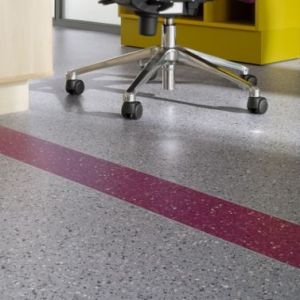
 Kitchens are places where meals are cooked and eaten in residences. It is one of the most used places in residences. This requires floor covering to fulfill some functions very well. There is no more difficult problem than finding the perfect kitchen flooring. This type of floor covering should have the following properties:
It should be easily cleaned.
It should be resistant to staining and should not be affected by oiling.
It should be comfortable, warm and flexible.
Almost all floor coverings must be durable enough for kitchen activities, and the actual durability criteria are not so important. However, it is not possible to find all of the above attributes in a single floor covering. As a rule, warm and flexible floors are easily stained, while floor coverings that are resistant to external influences are hard and cold. Therefore, the user should be left to choose between ease of cleaning and comfort.
Natural stone floor coverings are widely used because they are highly resistant to staining and are easily cleaned. The only drawbacks to their use are their hardness and coldness. However, as it is used, it becomes slippery and some marbles can be easily stained. Cast and tiled mosaic are also hard and cold like floor coverings that are resistant to other external influences (waterproof, etc.).
Cork plates are the warmest kitchen flooring; however, it must be polished frequently due to its absorbent nature. A cork carpet with a rougher texture is not suitable as it will become badly dirty in the future and will not be hygienic.
Rubber floor coverings are warm and soft, but affected by oil. The use of rubber as a kitchen floor covering is common; but it is considered difficult for you to keep it clean all the time. When using this material, it is recommended to keep the models in a neutral color. Because such colors show the stains less. In places where sound insulation is important, such as apartment kitchens, sponge rubber is frequently used. Although this material is quite soft and comfortable in appearance, it can be quite tiring for someone who is constantly walking on it. At this point, it is important to distinguish softness and flexibility. Softness is a property that, even if temporarily, has an effect on the floor on which the load is applied. On the other hand, flexibility is the product of the entire surface of a floor under load and can be achieved when the floor covering is applied over the frame and the blind floor. In this case, the floor covering itself is not supposed to be soft but just flexible. This definitely creates a more comfortable situation. Despite being one of the oldest, linoleum is still one of the most important kitchen floor coverings. It is still by far the most common use and provides perhaps the best compromise between cold, weather-resistant material and the extremes of hot holding materials. Linoleum is highly stain resistant, warm enough and comfortable. When it is laid on wooden flooring with cadres, it also provides the necessary flexibility.
Although they do not provide complete resistance to oils, PVCs with thermo-plastic floor coverings have started to be widely used and are generally satisfactory when laid on underlayment. This material is suitably warm and not too noisy; but it needs careful protection. Vinyl asbestos floor coverings are of the highest quality. It is more resistant to oils and does not require special care. The wide range of colors provides a good bright-warm color choice suitable for contemporary kitchens.
 Flooring Systems